![YADABA FINAL LOGO[1460]](https://yadabacomms.com/wp-content/uploads/2021/07/YADABA-FINAL-LOGO1460-1.png)
When the Facts Aren’t Enough: The Role of Storytelling in Corporate Communication

More Than a Magazine: A Conversation About the Future of Banking
September 7, 2026
Rethinking Ghanaian Cuisine
September 14, 2026
A company can have a strong product, a good reputation and plenty of information to share, yet still struggle to connect with the people it needs to reach.
Often, the problem isn’t a lack of information. It’s that the information has no story.
Corporate communication can easily become a collection of announcements, figures, achievements and formal statements. All of these have their place. But people don’t always remember a list of facts. They remember what those facts meant, who they affected and why they mattered.
That’s where storytelling becomes useful.
Storytelling in corporate communication isn’t about making things up or turning every business update into an emotional speech. It is about giving information context. A company’s annual report, for example, may show that revenue increased. A good corporate story helps stakeholders understand what drove that growth, what it means for the organisation and what comes next.
The same principle applies when communicating change.

Imagine an organisation introducing a new system that will alter how staff work. A memo explaining the new procedures may be accurate, but employees are likely to have questions that the memo doesn’t answer: Why is this happening? What problem are we trying to solve? How will it affect my work?
A well-structured story can answer those questions without hiding the difficult parts.
There is another common mistake: assuming that storytelling is only useful for marketing. It isn’t. Leaders use stories to explain decisions. Public relations teams use them to give media statements context. NGOs use them to show the human side of their programmes. Government institutions can use them to make public information easier to understand. Even internal communication benefits when people can see how their role connects to a wider purpose.
The key is discipline.
A corporate story should still be accurate. It should be relevant to the audience. It should not exaggerate results or turn ordinary work into something it isn’t. Most importantly, the story must support the organisation’s communication objective.

At Yadaba Communications, we see storytelling as part of the wider communication process rather than a decorative addition. The right story can help an organisation explain its work more clearly, prepare for difficult conversations, strengthen stakeholder relationships and communicate its identity consistently across different platforms.
That requires understanding both the organisation and the people listening to it. The same message may need a different story for employees, journalists, customers, investors, regulators or the general public.
Before writing the next corporate message, ask a simple question: What should the audience understand, feel or remember after hearing this?
The answer may tell you more about the story you need than the information you currently have.
Want to communicate your organisation’s story with greater clarity and purpose?
Contact Yadaba Communications:
Email: info@yadabacomms.com | yadabacomms@gmail.com
Phone: 0530505004 | 050 590 2672
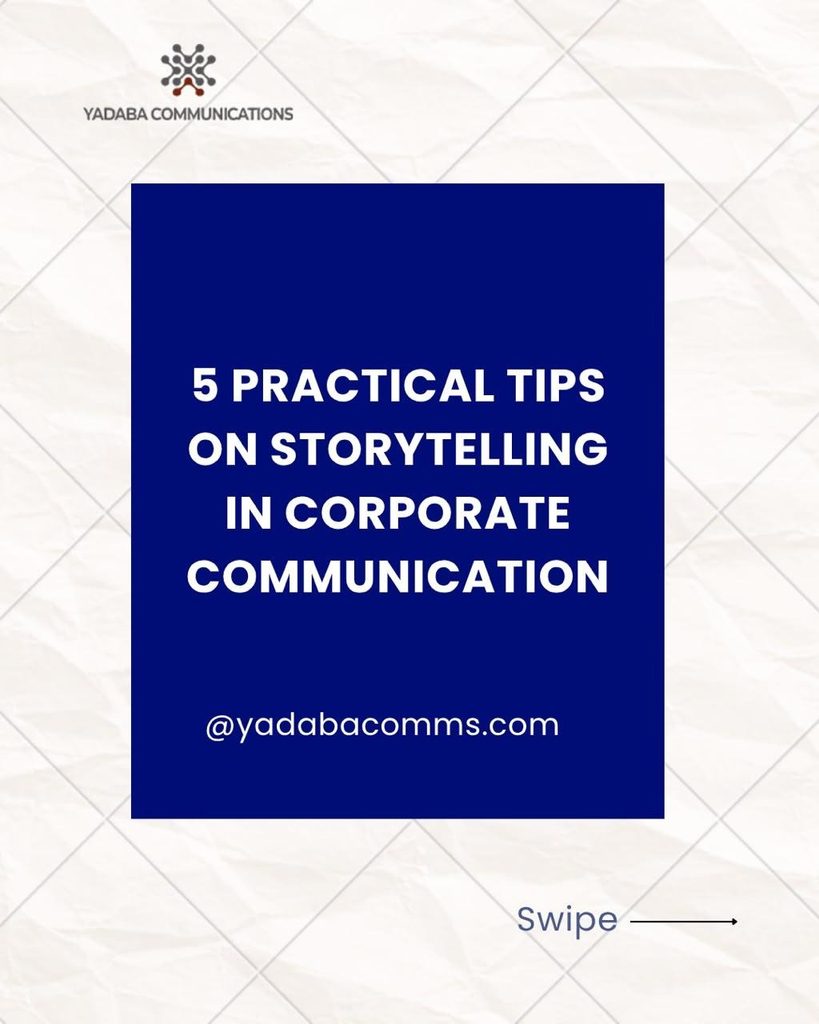
5 Practical Tips on Storytelling in Corporate Communication
- Start with the point. Know what you want people to understand or remember before building the story.
- Put people in the picture. Show how a decision, project or result affects real people and stakeholders.
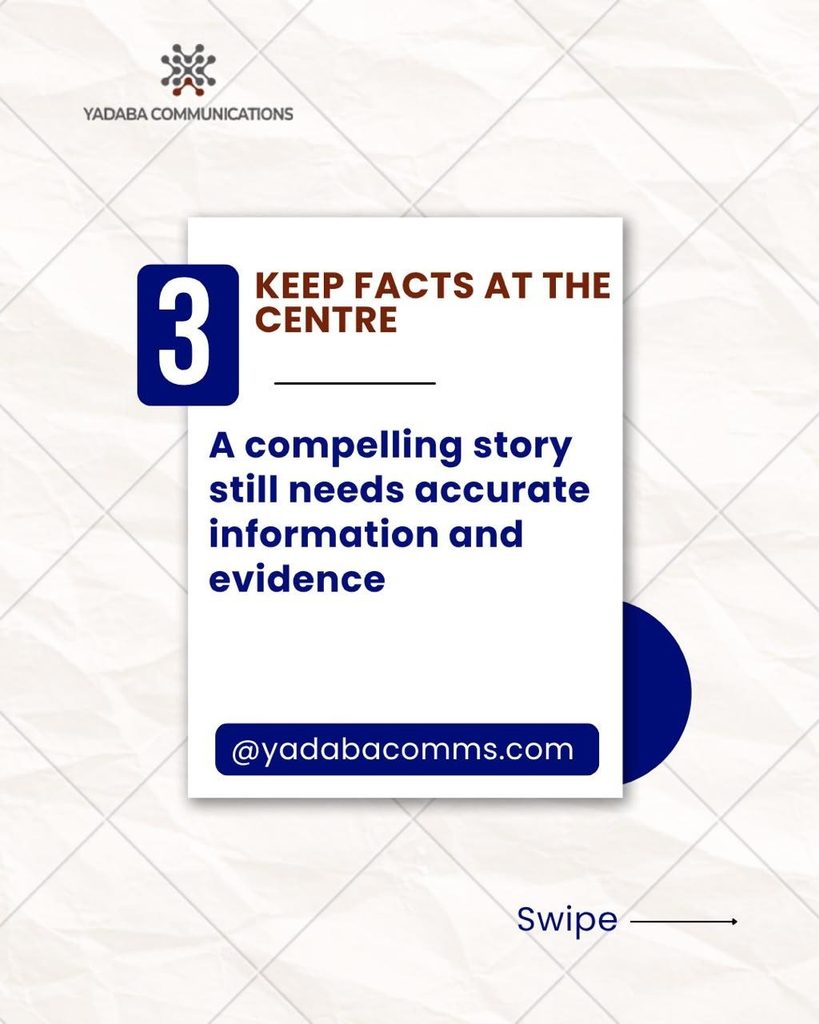
- Keep facts at the centre. A compelling story still needs accurate information and evidence.
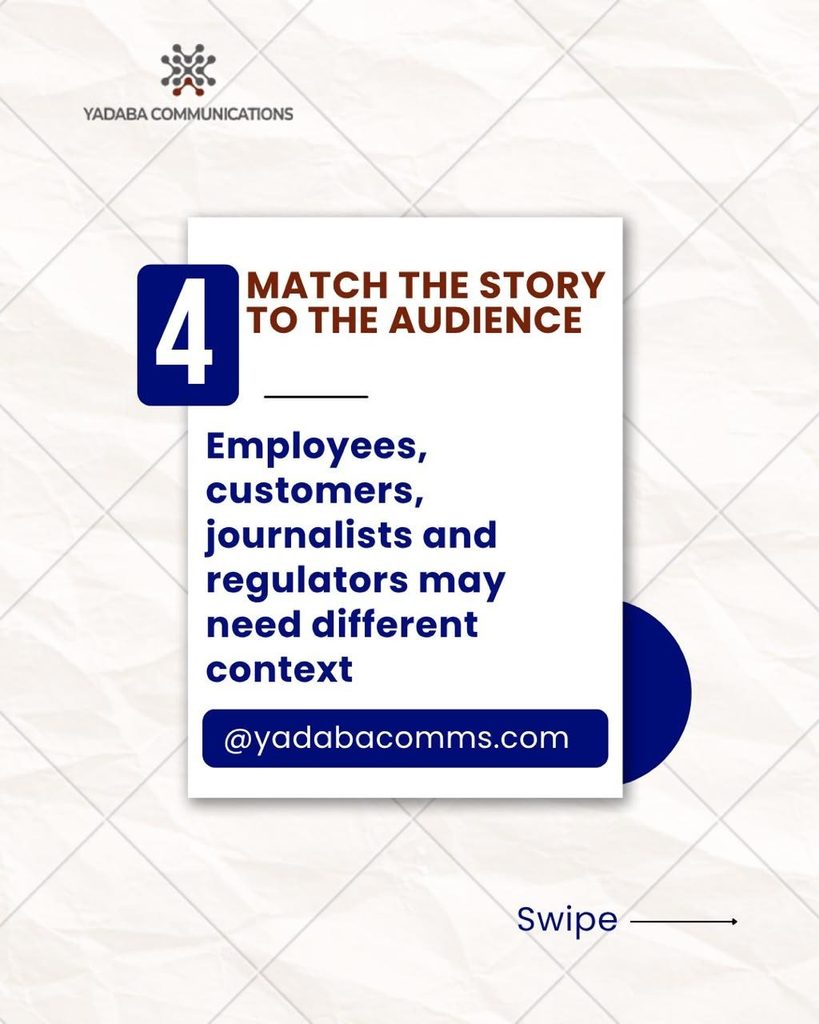
- Match the story to the audience. Employees, customers, journalists and regulators may need different context.
- Give the story a clear ending. Tell people what the information means and what they should expect next.
Tips Cards Copy
Good corporate communication isn’t just about having something to say. It’s about helping people understand why it matters.
Our latest Tips Card shares five practical ways to use storytelling to make corporate communication clearer, more relevant and easier to remember.
Save it for your next communication project, and share it with someone who needs it.
For strategic communication support, contact Yadaba Communications:
info@yadabacomms.com
yadabacomms@gmail.com
0530505004 | 050 590 2672
#YadabaComms #PublicRelations
Tips Card