![YADABA FINAL LOGO[1460]](https://yadabacomms.com/wp-content/uploads/2021/07/YADABA-FINAL-LOGO1460-1.png)
Peace, Dialogue and the Power of Strategic Communication

Turning Political Mandate into Livelihoods: Inside Steven Odarteifio’s NDC Youth Bid
September 21, 2026
Access to Information: Transparency Is a Communication Practice
September 28, 2026
A disagreement doesn’t always become a crisis because the issue is serious. Sometimes, it becomes a crisis because people stop talking to each other.
A delayed response, a poorly worded statement, an unanswered concern or a message that reaches the wrong audience can create tension that was avoidable in the first place.
That’s where communication matters.
Yesterday, Ghana marked Founder’s Day. Looking back at Kwame Nkrumah and the struggle that led to independence, one thing is clear: building a nation required people to organise, persuade, negotiate and engage with others who did not always see things the same way.
The same principle applies inside organisations today.
Peace in an organisation doesn’t mean everyone agrees. It means there are ways to disagree, raise concerns and resolve differences without allowing them to damage relationships or the organisation itself.
Strategic communication helps create those ways.

It starts with understanding what people need to know, what they may be concerned about and what needs to be said — and sometimes, what should not be said yet.
This matters especially when an organisation is under pressure. During a crisis, people are often looking for answers before all the facts are available. Silence can create its own questions. A rushed statement can create new problems.
Good crisis communication is therefore not about saying something quickly just for the sake of being visible. It is about knowing what to say, who needs to hear it, when to say it and how to keep the message consistent as the situation develops.
The same thinking applies before a crisis.
When employees, customers, partners, regulators, the media and other stakeholders understand an organisation’s position, there is less room for unnecessary confusion. And when concerns are heard early, some problems can be addressed before they become public ones.
At Yadaba Communications, we look at communication from that practical angle. We help organisations plan their messages, engage the people who matter, manage difficult situations and protect important relationships when tensions arise.

Because sometimes the best communication work is the conversation that prevents a bigger problem.
The takeaway: Peaceful communication is not about avoiding difficult conversations. It is about having them well.
If your organisation needs help with strategic communication, public relations, stakeholder engagement or crisis communication, Yadaba Communications is ready to help.
info@yadabacomms.com | yadabacomms@gmail.com
053 050 5004 | 050 590 2672
5 Practical Tips on Peace, Dialogue and Strategic Communication
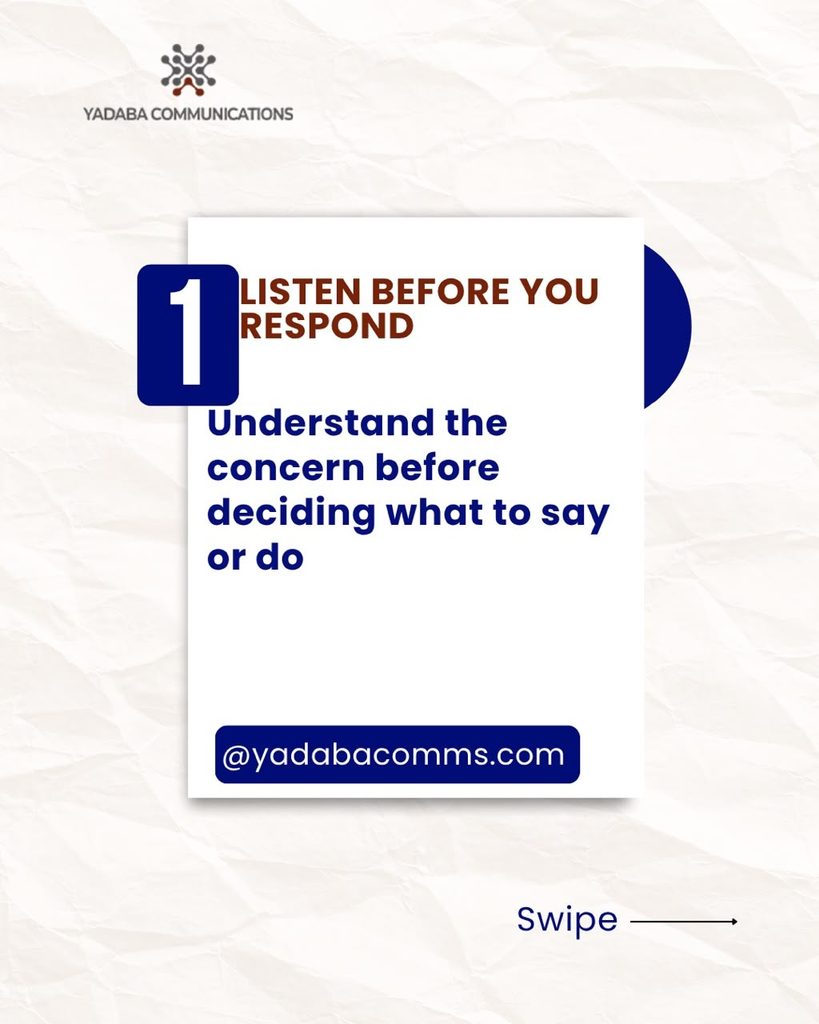
1. Listen before you respond.
Understand the concern before deciding what to say or do.
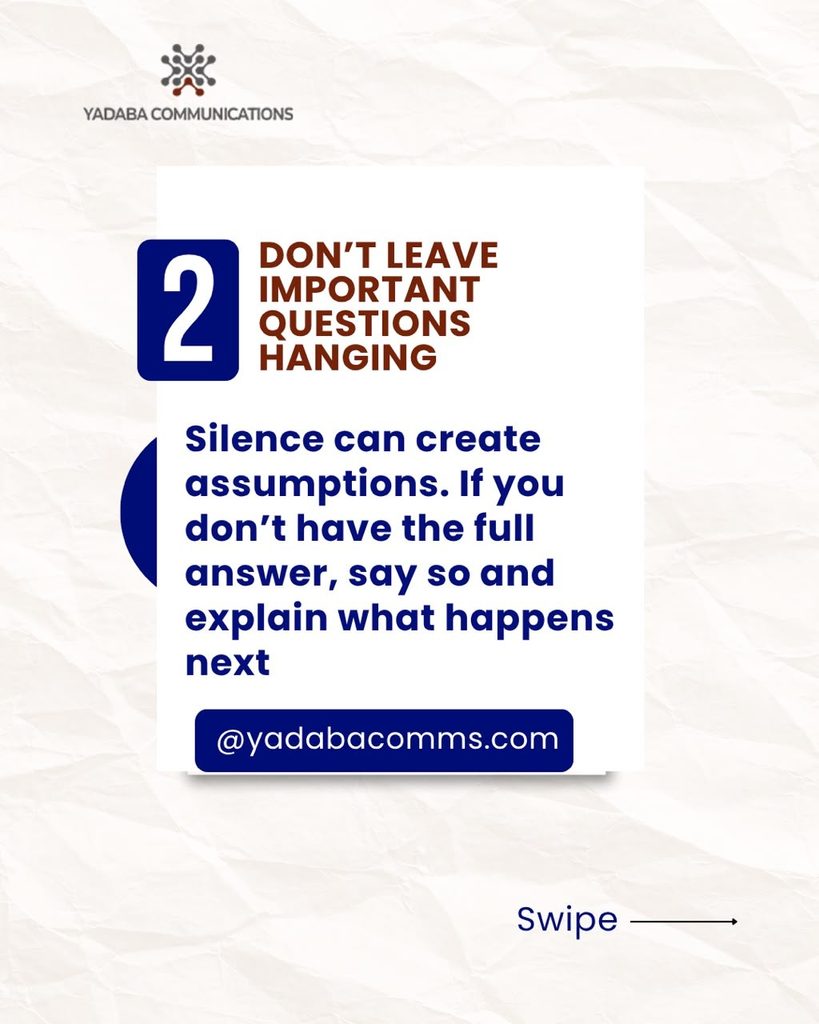
2. Don’t leave important questions hanging.
Silence can create assumptions. If you don’t have the full answer, say so and explain what happens next.
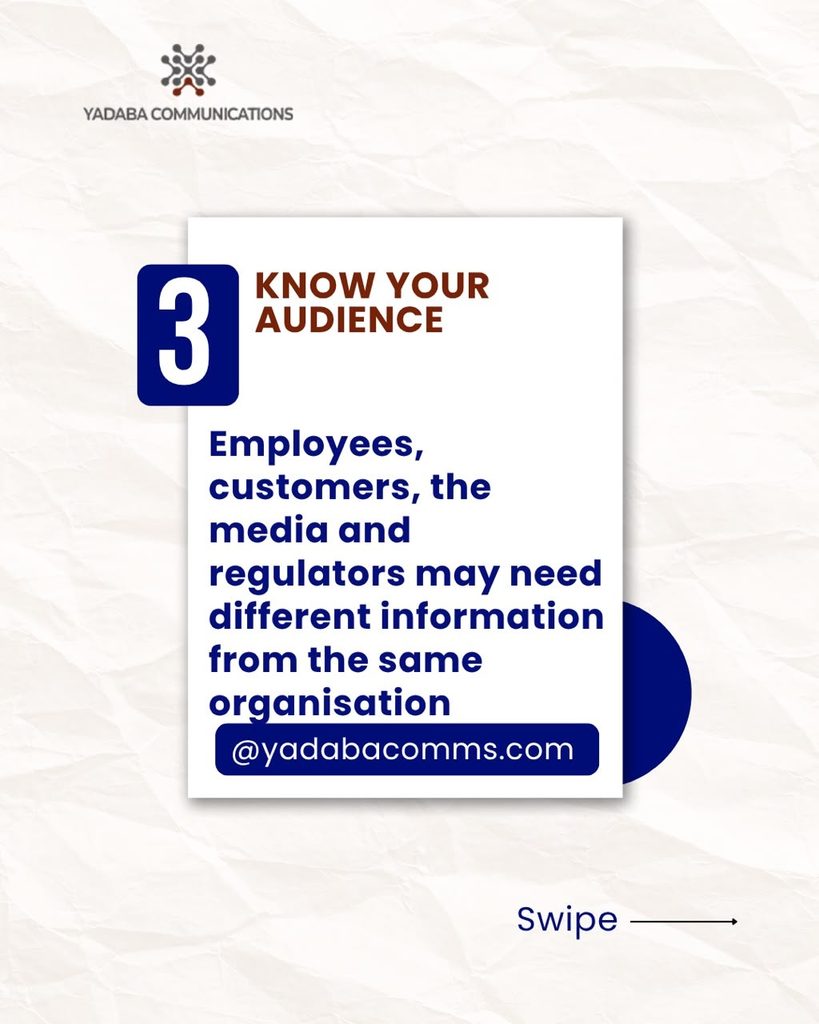
3. Know your audience.
Employees, customers, the media and regulators may need different information from the same organisation.
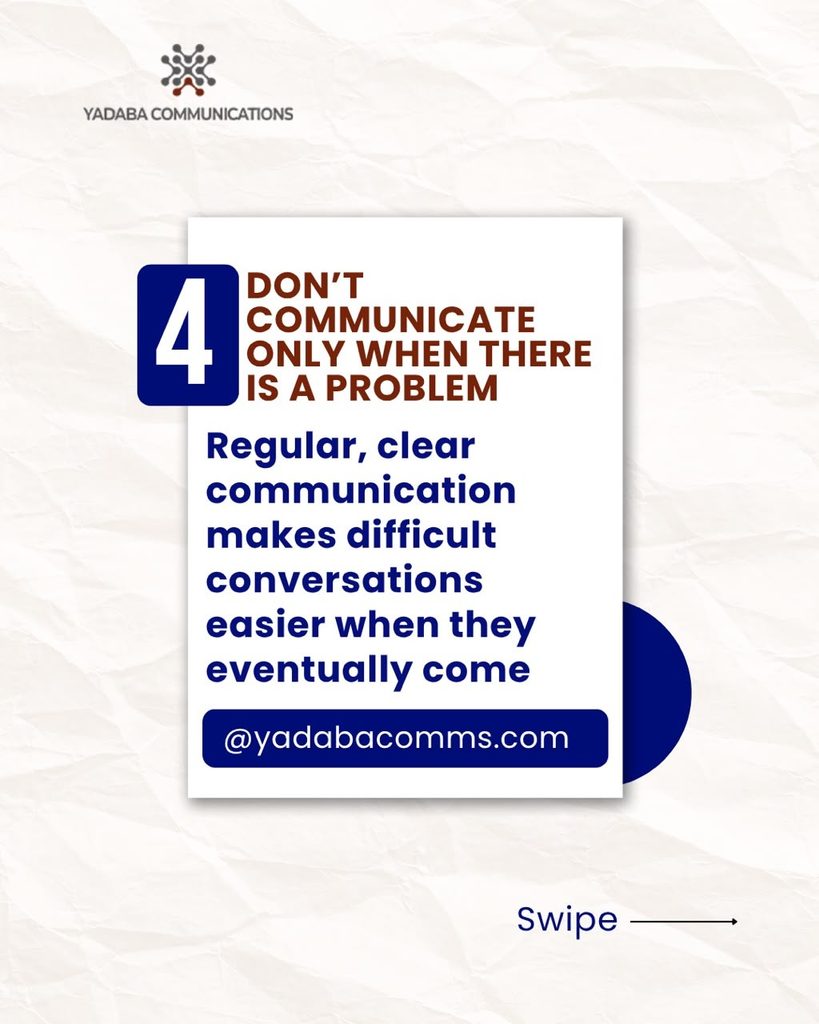
4. Don’t communicate only when there is a problem.
Regular, clear communication makes difficult conversations easier when they eventually come.
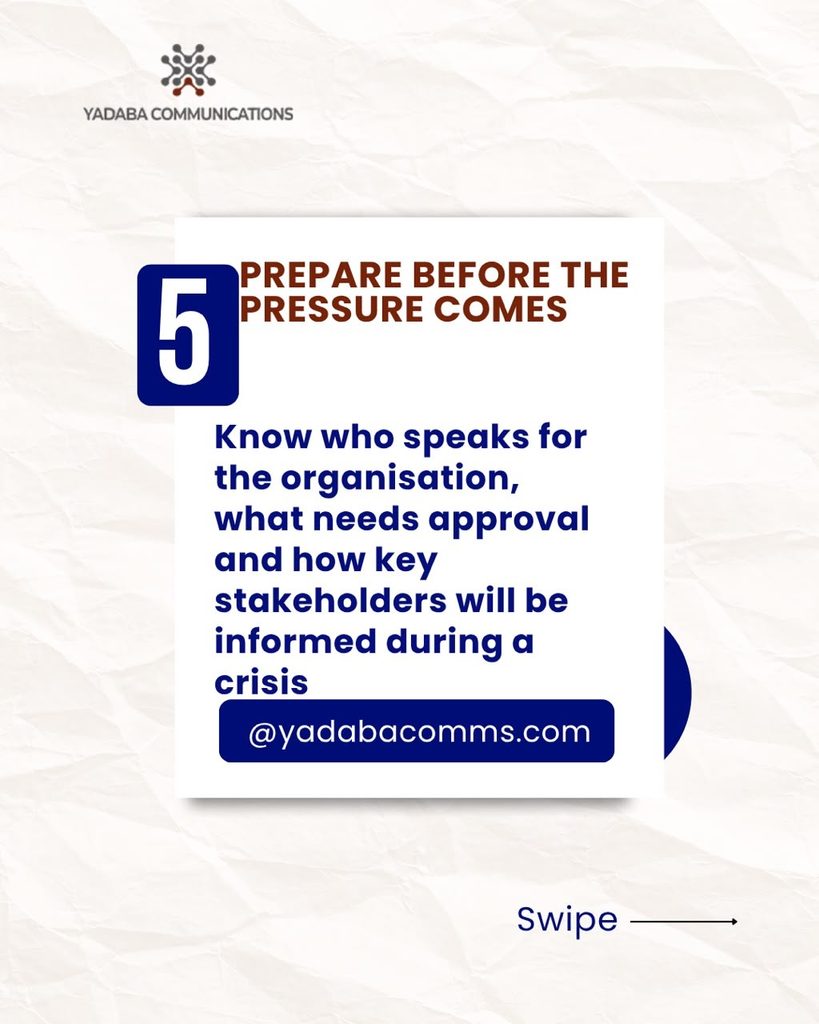
5. Prepare before the pressure comes.
Know who speaks for the organisation, what needs approval and how key stakeholders will be informed during a crisis.
Tips Card Caption
Good communication can prevent a difficult situation from becoming a bigger one.
We’ve put together 5 practical tips on peace, dialogue and strategic communication to help organisations handle conversations better, especially when the stakes are high.
And if your organisation needs support with strategic communication, PR or crisis communication, talk to Yadaba Communications.
info@yadabacomms.com |
yadabacomms@gmail.com
0530505004 | 0505902672
#YadabaComms #PublicRelations
Tips Cards