![YADABA FINAL LOGO[1460]](https://yadabacomms.com/wp-content/uploads/2021/07/YADABA-FINAL-LOGO1460-1.png)
Preparing for the Crisis You Hope Never Comes

Building Ghana’s Corporate Boardroom Agenda
July 29, 2026
Communication Ethics When Every Message Leaves a Trail
August 12, 2026
Most organisations don’t think about a crisis until they’re in the middle of one. It might begin with a customer complaint that gains attention online, a workplace incident, an inaccurate media report, or a service disruption that leaves clients looking for answers. In those first few hours, people are rarely expecting perfection. What they want is clarity, honesty, and confidence that the situation is being handled.
The challenge is that many organisations mistake crisis management for damage control. They assume the real work starts after something has gone wrong. In practice, the strongest responses are almost always built long before the first phone call from a journalist or the first post appears on social media.
Crisis preparedness is not about expecting the worst. It’s about reducing uncertainty when pressure is high. A well-prepared organisation knows who will speak on its behalf, how information will be verified before it is shared, which stakeholders need immediate attention, and what decisions require executive approval. These are not details to settle during an emergency. They should already be part of the organisation’s planning.

One common misunderstanding is that only large corporations need formal crisis plans. Smaller businesses, NGOs, government institutions, and growing startups often believe they can respond as issues arise. The reality is that a smaller organisation may have fewer resources to recover from reputational damage, making preparation even more valuable. A delayed response, conflicting messages, or silence can quickly weaken trust among customers, employees, partners, and the public.
Risk planning also extends beyond communications. Every operational risk has a communication dimension. A cybersecurity incident raises questions from customers. A workplace accident affects staff confidence. Changes in leadership invite public interest. Even positive developments can create confusion if expectations are not managed carefully. Preparing for these conversations in advance allows organisations to respond with consistency instead of reacting under pressure.
An effective crisis plan is not a document that sits untouched on a shelf. It should be reviewed regularly, tested through practical exercises, and updated as the organisation grows. Leadership teams should understand their individual responsibilities, while employees should know where accurate information will come from during uncertain moments. When everyone understands the process, organisations spend less time deciding what to say and more time addressing the issue itself.

At Yadaba Communications, we see crisis preparedness as part of good organisational leadership rather than a separate communications exercise. Our role is to help organisations think through potential risks before they become public challenges. That includes developing communication strategies, preparing spokespersons, strengthening stakeholder engagement, supporting media relations, and creating practical response plans that reflect how each organisation operates. The goal is not simply to protect a reputation but to help leaders communicate with credibility when it matters most.
Every organisation will face difficult moments. The difference is rarely the absence of a crisis; it is the quality of the preparation behind the response. Trust is built over time, but it can be tested in a single day. The organisations that retain confidence are usually those that planned before they needed to.
If your organisation is reviewing its crisis preparedness or would like support in developing a practical communication and risk response plan, we’d be pleased to help.
Contact us:
Email: info@yadabacomms.com | yadabacomms@gmail.com
Phone: 0530505004 | 050 590 2672
5 Practical Tips for Better Crisis Preparedness
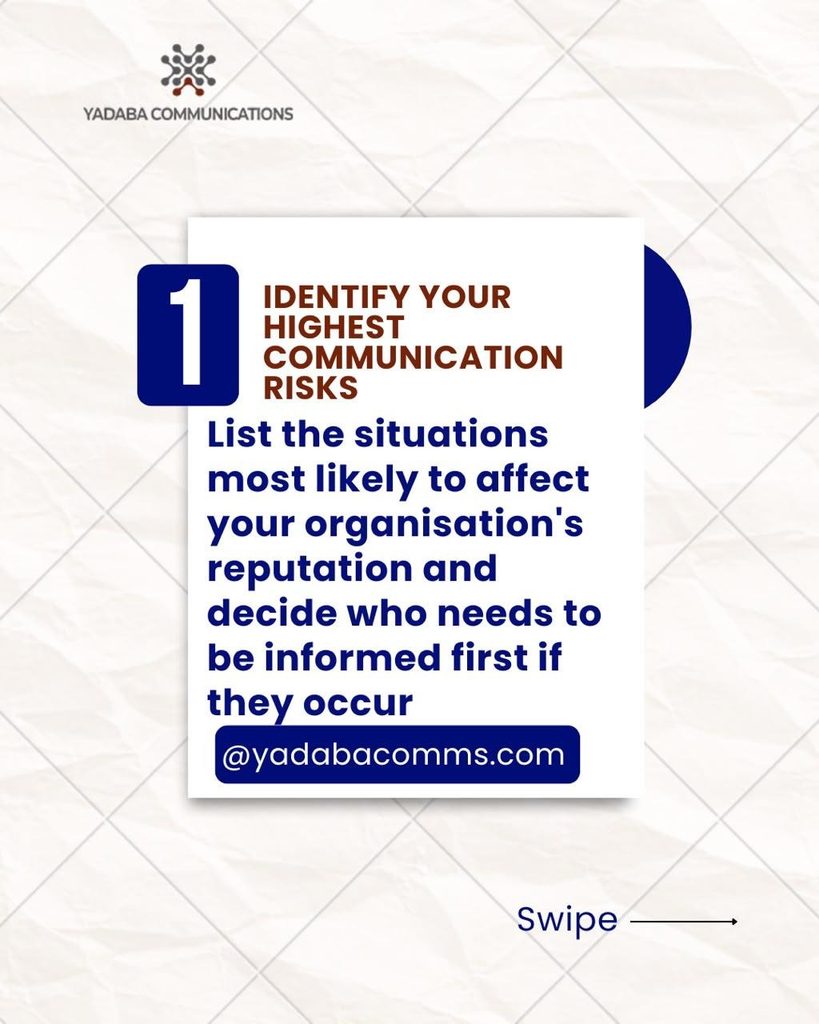
1. Identify your highest communication risks.
List the situations most likely to affect your organisation’s reputation and decide who needs to be informed first if they occur.
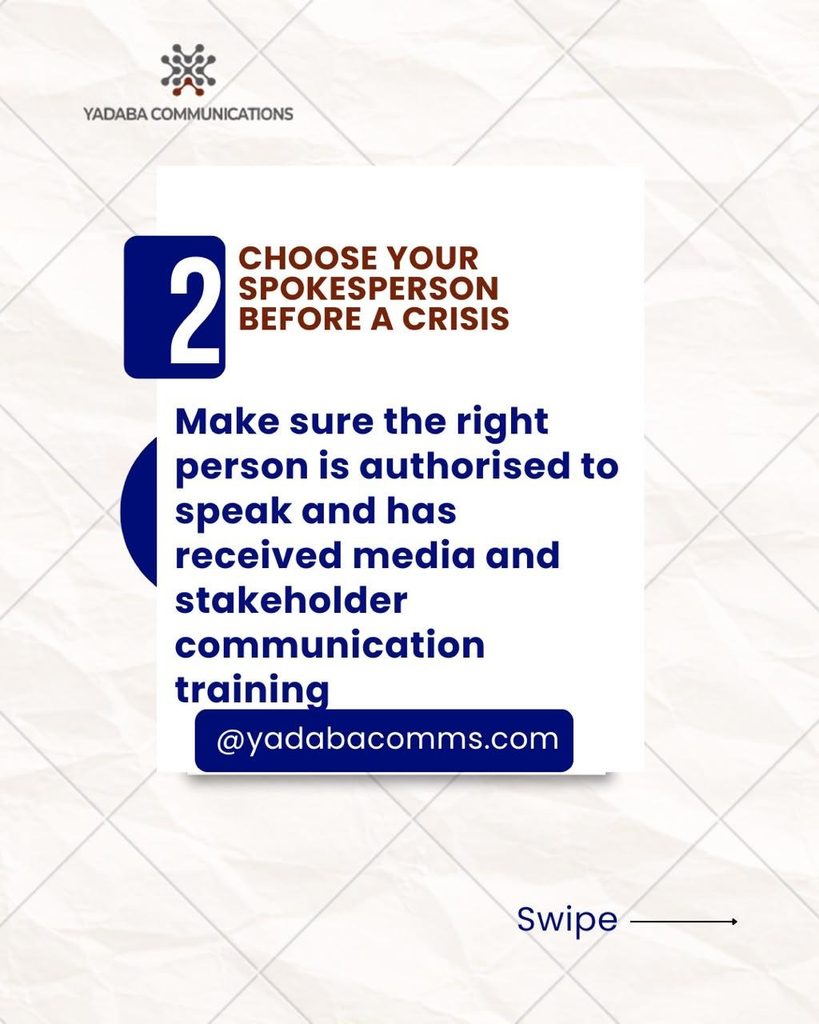
2. Choose your spokesperson before a crisis.
Make sure the right person is authorised to speak and has received media and stakeholder communication training.
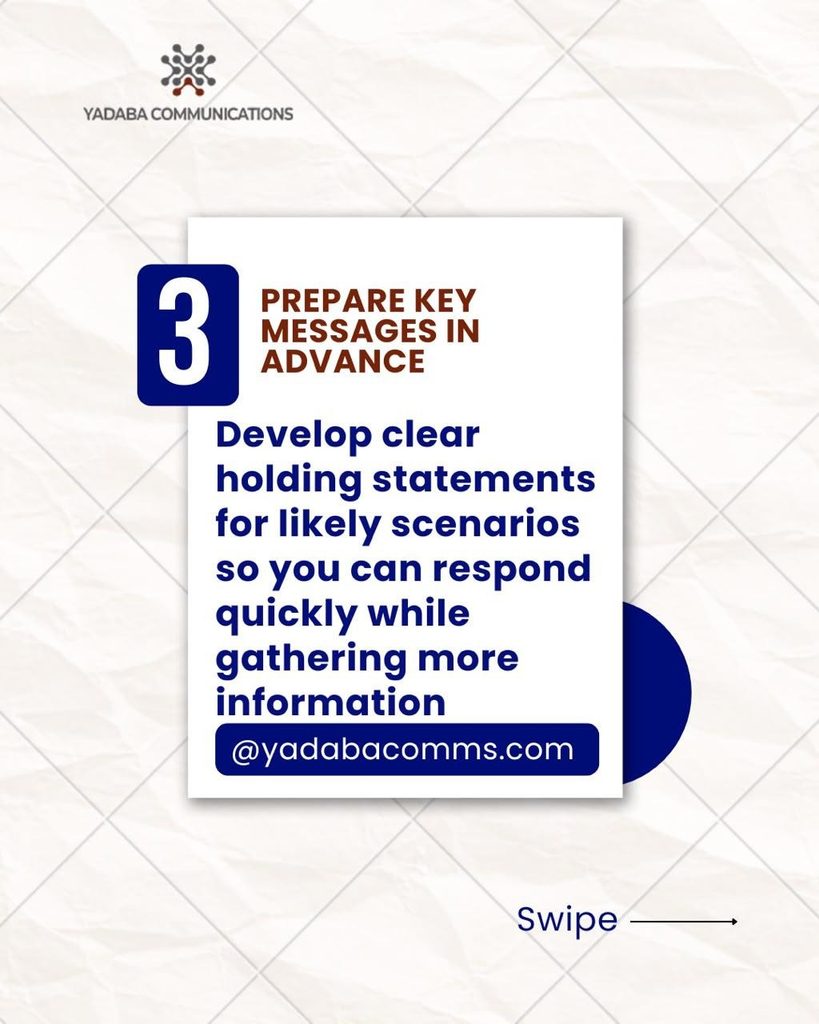
3. Prepare key messages in advance.
Develop clear holding statements for likely scenarios so you can respond quickly while gathering more information.
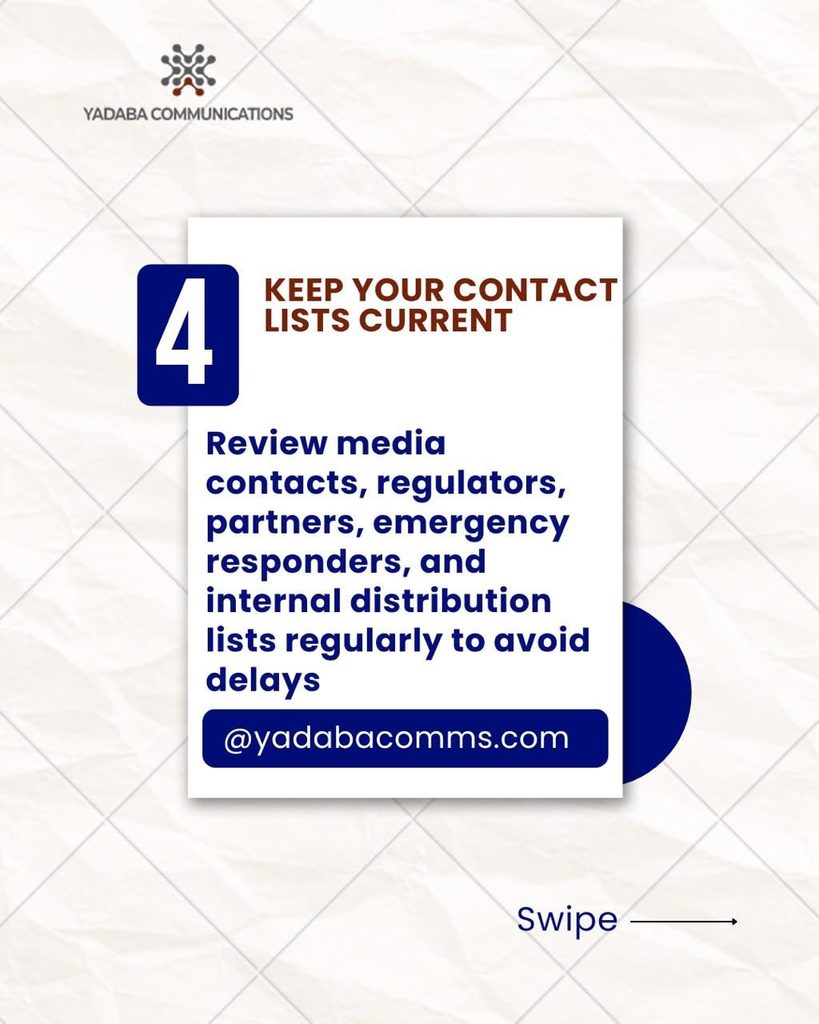
4. Keep your contact lists current.
Review media contacts, regulators, partners, emergency responders, and internal distribution lists regularly to avoid delays.
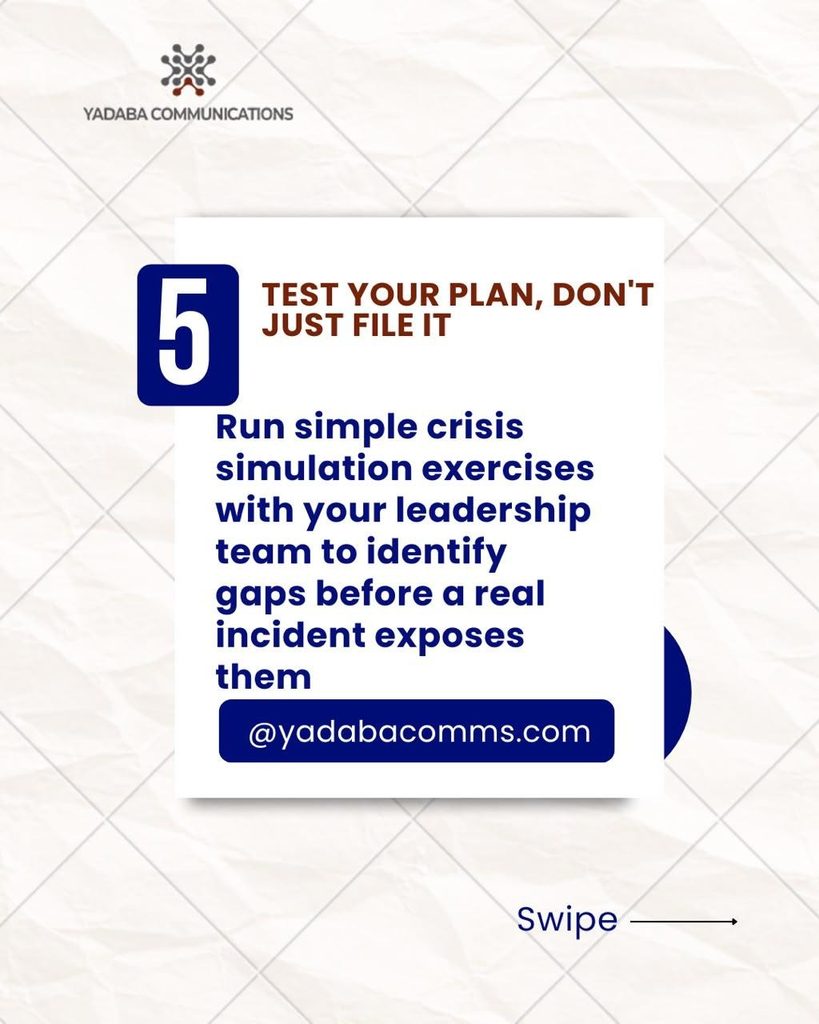
5. Test your plan, don’t just file it.
Run simple crisis simulation exercises with your leadership team to identify gaps before a real incident exposes them.
Social Media Copy
A crisis doesn’t have to become a communication disaster.
The strongest organisations are usually the ones that have already agreed on who speaks, what gets communicated first, and how key stakeholders will be kept informed.
We’ve put together 5 practical tips to help organisations strengthen their crisis preparedness and respond with greater confidence when unexpected situations arise.
Need support with crisis communication planning, media preparedness, or stakeholder engagement?
info@yadabacomms.com | yadabacomms@gmail.com
0530505004 | 050 590 2672
#YadabaComms #PublicRelations
Tips