![YADABA FINAL LOGO[1460]](https://yadabacomms.com/wp-content/uploads/2021/07/YADABA-FINAL-LOGO1460-1.png)
Corporate Communications: When the Message Is Clear but the Meaning Isn’t

Measuring Communication ROI: Proving the Value Beyond Visibility
August 17, 2026
Your Product Is Ready. Is Your Communication?
August 31, 2026
A company can send out a perfectly written announcement and still leave people confused.
The problem isn’t always the words. Sometimes employees don’t understand why a decision was made. Customers hear something different from what management intended. Partners receive information too late. A public statement answers the question being asked, but not the question people are actually worried about.
That’s where corporate communications needs more than good writing.
Communication is part of decision-making
Many organisations treat communication as the final step after a decision has already been made. The communications team is given the information, asked to “put something together,” and expected to make it work.
That approach creates avoidable problems.
Good corporate communication starts earlier. Before an announcement is drafted, someone should be asking: Who needs to know? What do they need to understand? What might they misunderstand? Who could be affected? What questions are likely to follow?
These questions help an organisation communicate with purpose rather than simply distribute information.
There’s another issue that often gets missed: different stakeholders rarely need the same message.
An employee may want to know how a change affects their work. A customer may be concerned about service. A regulator may need specific facts. The media may want context. Senior management may be focused on protecting confidence in the organisation.
The core message can remain consistent, but the explanation has to meet people where they are.

What organisations should do differently
Start by identifying the communication objective before writing anything.
If the purpose is to explain a policy change, don’t measure success by whether the memo was sent. Ask whether people understood what changed, why it changed and what they should do next.
Also, don’t wait for difficult communication to become a crisis. Regular internal communication, clear stakeholder engagement and good media relationships make it easier to respond when pressure arrives.
And when something goes wrong, resist the temptation to communicate simply because silence feels uncomfortable. A rushed statement can create a second problem while trying to address the first. Good crisis communication requires facts, timing, empathy and a clear sense of what the organisation can responsibly say.

The Yadaba Communications Perspective
At Yadaba Communications, we look at corporate communication as a business function, not just a writing exercise.
That means helping organisations clarify their messages, understand their stakeholders, manage media relationships, protect their reputation and prepare for difficult conversations before they happen.
Sometimes the solution is a stronger communication plan. Sometimes it’s better internal messaging, media preparation, stakeholder engagement or crisis communication. The right approach depends on the organisation and the situation.
The practical question is simple: After people receive your message, what do you want them to understand, believe or do?
If that answer isn’t clear, the communication probably isn’t ready.
For corporate communications support, contact Yadaba Communications:
Email: info@yadabacomms.com | yadabacomms@gmail.com
Phone: 0530505004 | 050 590 2672
5 Practical Tips on Corporate Communications
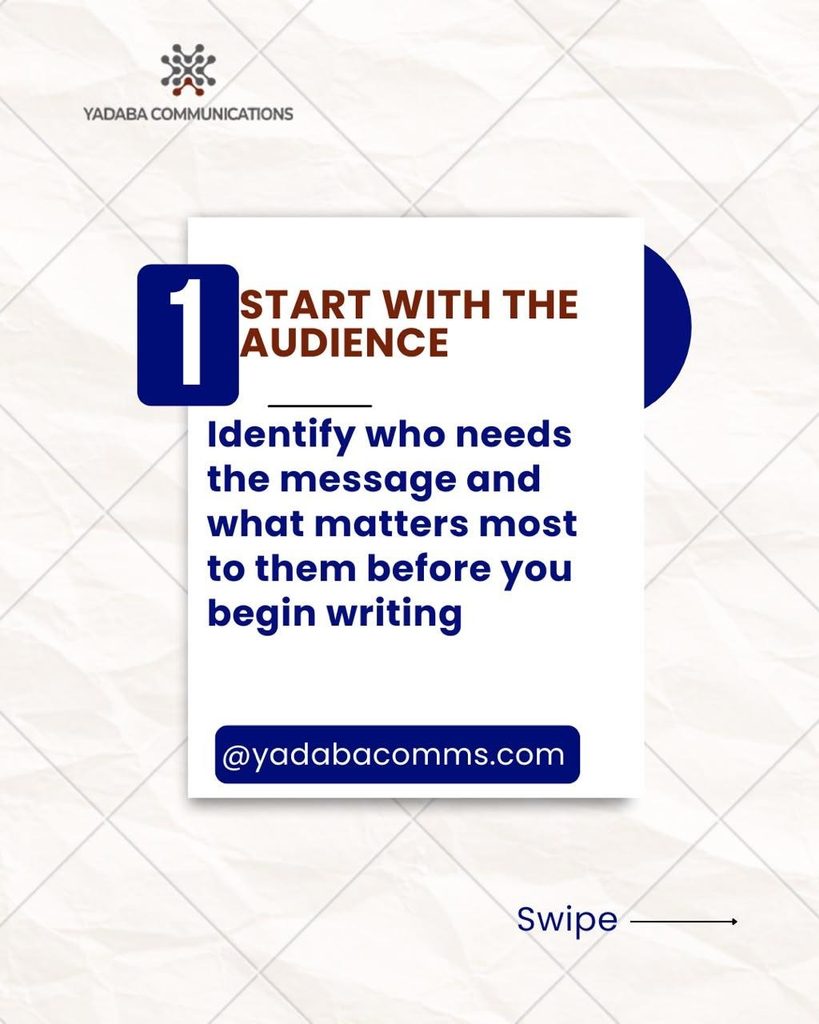
Start with the audience: Identify who needs the message and what matters most to them before you begin writing.
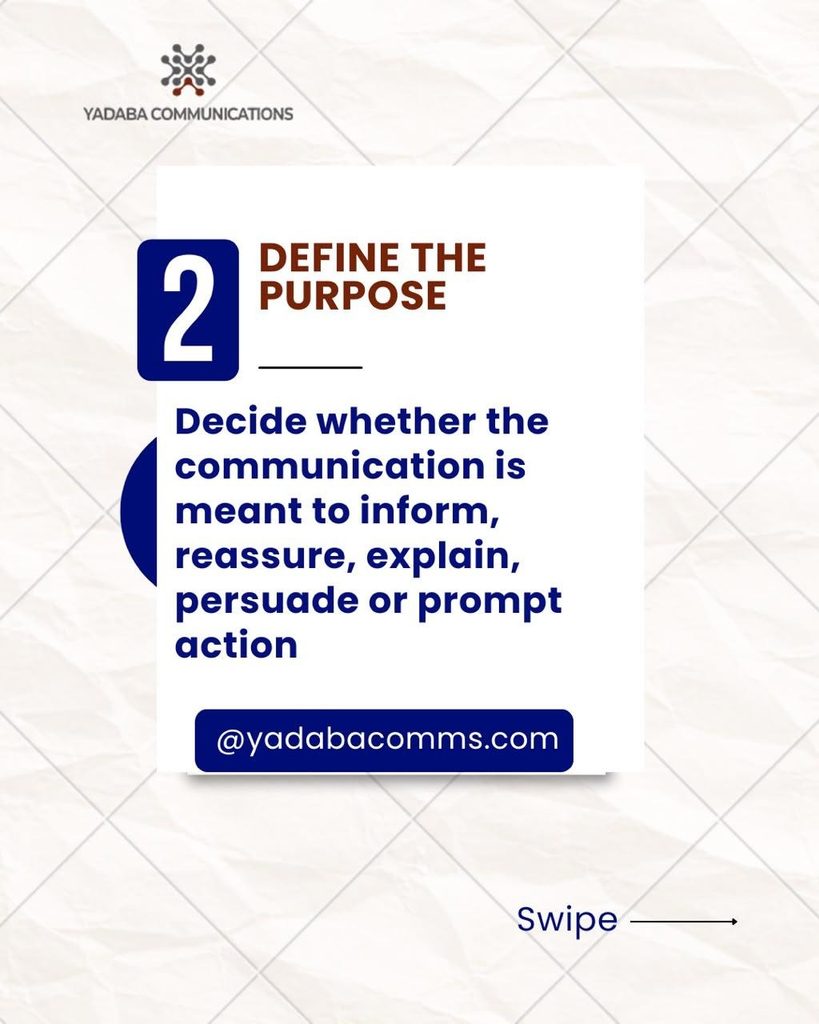
Define the purpose: Decide whether the communication is meant to inform, reassure, explain, persuade or prompt action.
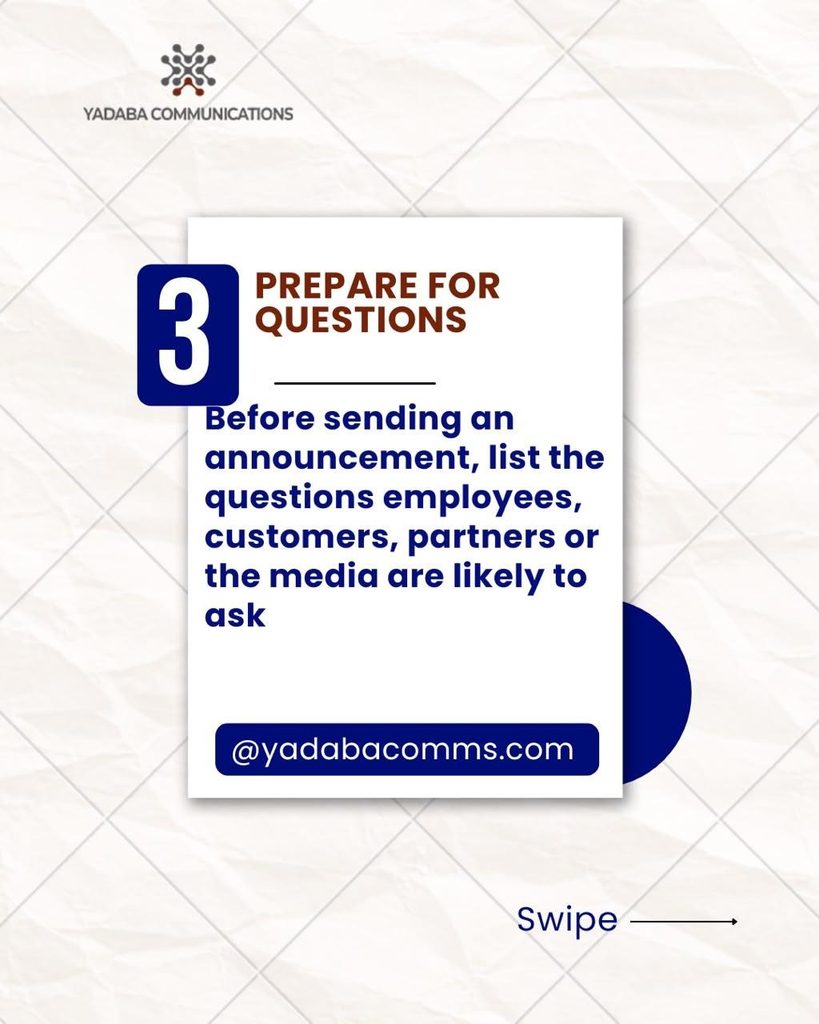
Prepare for questions: Before sending an announcement, list the questions employees, customers, partners or the media are likely to ask.
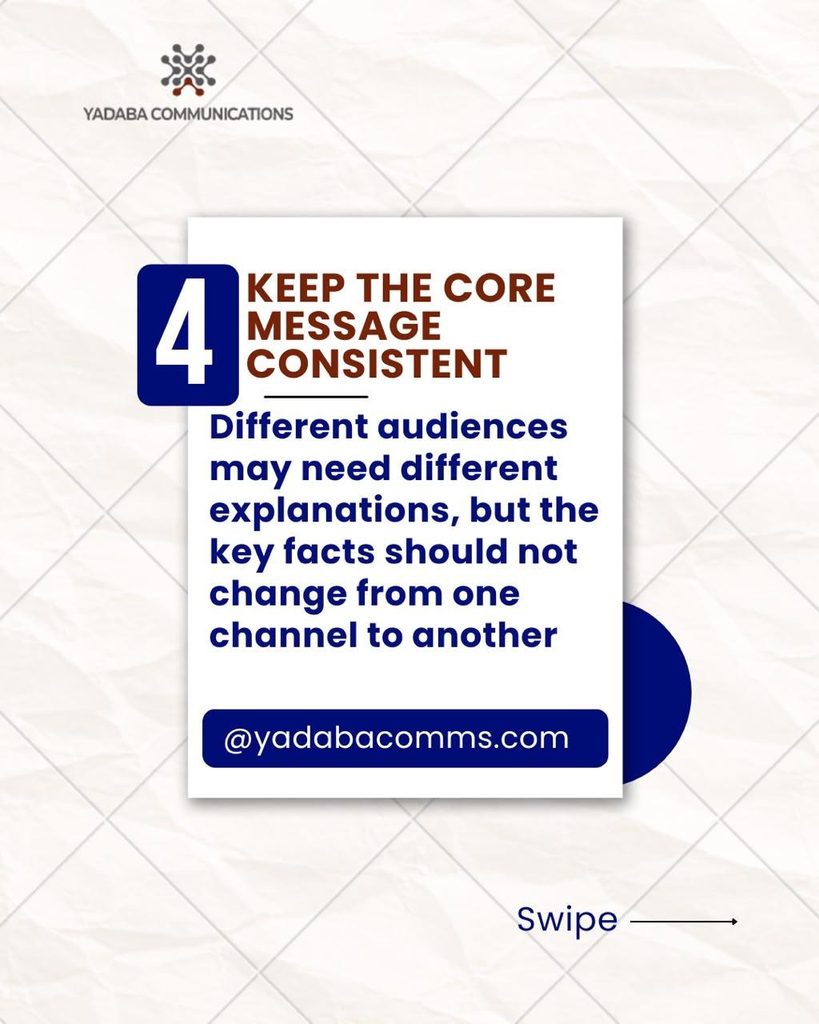
Keep the core message consistent: Different audiences may need different explanations, but the key facts should not change from one channel to another.
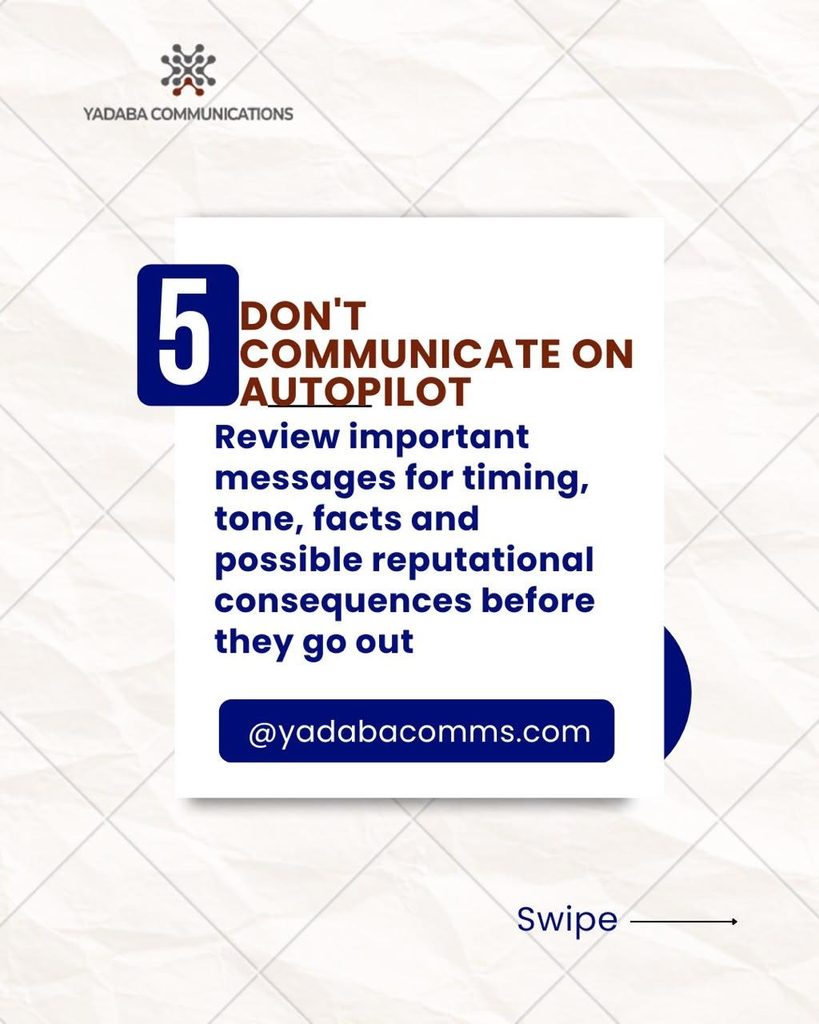
Don’t communicate on autopilot: Review important messages for timing, tone, facts and possible reputational consequences before they go out.
Tips Card Social Caption
A message can be grammatically perfect and still miss the people it was meant for.
Our latest tips card shares five simple ways to make corporate communication clearer, more useful and better suited to the people receiving it.
Save it for your next internal announcement, stakeholder update or public statement—and share it with someone responsible for communication in your organisation.
Need practical communications support? Talk to Yadaba Communications.
info@yadabacomms.com
yadabacomms@gmail.com
0530505004 | 050 590 2672
#YadabaComms #PublicRelations
Tips Card
Yadaba Communications Services Flyer Copy
Good communication supports good business.
From planning an event to handling media, building public trust, placing advertising, managing cross-platform communication, training teams and publishing the right content, Yadaba Communications helps organisations communicate with purpose.
If your organisation has something to say, an audience to reach or a reputation to protect, let’s talk.
info@yadabacomms.com | yadabacomms@gmail.com
0530505004 | 050 590 2672
#YadabaComms #PublicRelations
File