![YADABA FINAL LOGO[1460]](https://yadabacomms.com/wp-content/uploads/2021/07/YADABA-FINAL-LOGO1460-1.png)
When the Organisation Changes, Communication Has to Move With It

Rethinking Ghanaian Cuisine
September 14, 2026
Turning Political Mandate into Livelihoods: Inside Steven Odarteifio’s NDC Youth Bid
September 21, 2026
An organisation can announce a new structure, leadership team, policy, system or direction in one afternoon. For the people expected to work with that change, however, the adjustment can take weeks or months.
That gap is where communication often breaks down.
Leaders may believe they have explained the change because the announcement has gone out. Employees, customers, partners and other stakeholders may still be asking basic questions: What does this mean for me? What happens next? Who makes the decisions now? What is staying the same?
A change can be well planned and still create confusion if people hear different versions of the story from different parts of the organisation.
The problem isn’t always a lack of information. Sometimes there is too much of it, delivered without enough thought about what each audience actually needs to know.
A useful starting point is to separate the communication into three things: what is changing, why it is changing, and what people should expect next. Those answers should remain consistent, even when the language and level of detail change for different audiences.

Timing matters too. Communication shouldn’t begin when the final decision has already been made and the organisation is ready to publish an announcement. Some stakeholders need to be considered earlier, particularly when the change affects jobs, customers, public services, partnerships or the organisation’s reputation.
There is also a human side that leaders sometimes underestimate. People don’t only listen for facts during change; they listen for signs of certainty, fairness and direction. If senior management says one thing while managers give staff another explanation, confidence can fall quickly.
This is why communication during change needs more than a press release or internal memo. It requires a clear message, an understanding of stakeholder concerns, prepared spokespeople, appropriate channels and a plan for questions that haven’t been asked yet.
At Yadaba Communications, we help organisations think through those communication points before they become problems. Depending on the situation, that may involve stakeholder engagement, internal and corporate communication, public relations, media relations, reputation management or crisis communication.

Our role isn’t simply to make an announcement sound good. It’s to help organisations communicate decisions clearly, anticipate how different audiences may respond, and maintain trust while things are moving.
The key lesson is simple: people can accept change more easily when they understand what is happening, why it matters and what comes next.
If your organisation is preparing for a major change and wants to communicate it clearly, Yadaba Communications can help.
Email: info@yadabacomms.com | yadabacomms@gmail.com
Phone: 0530505004 | 0505902672
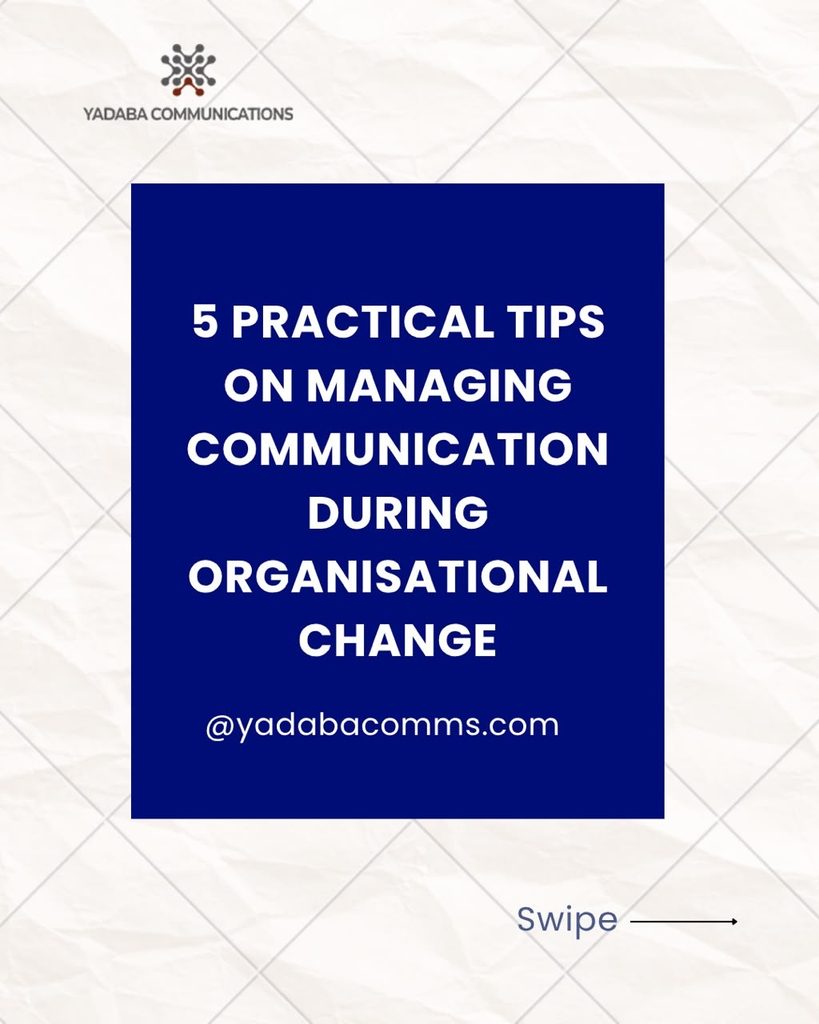
5 Practical Tips on Managing Communication During Organisational Change
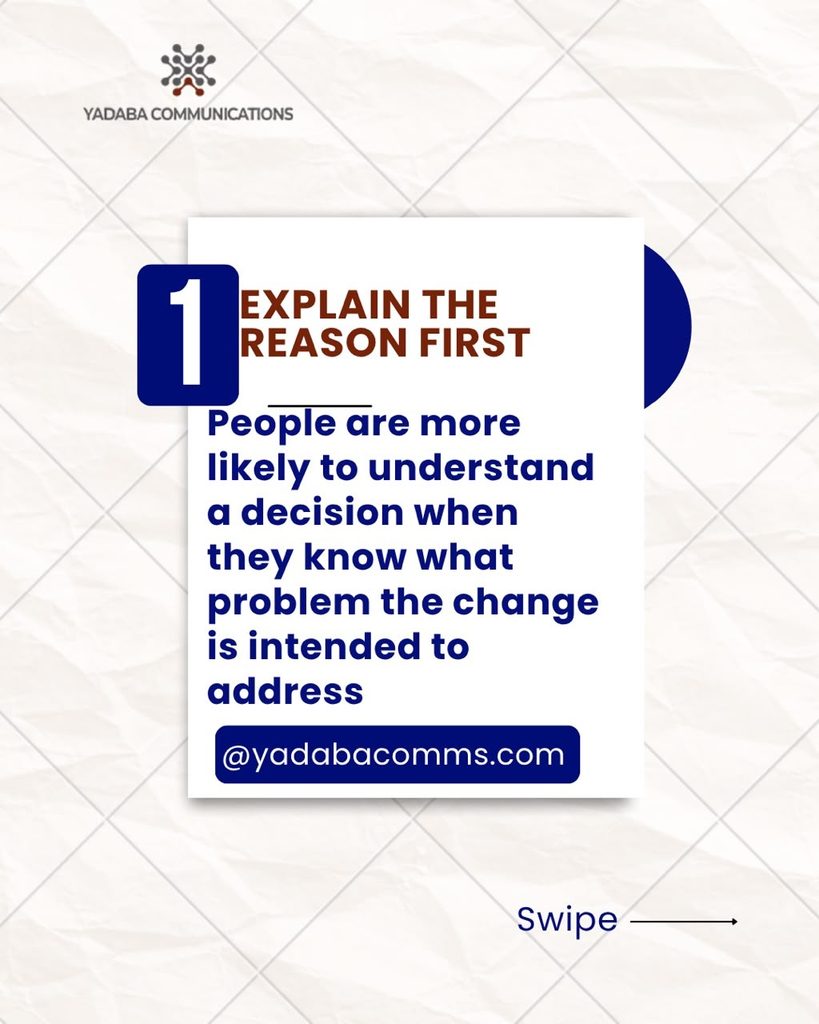
- Explain the reason first.
People are more likely to understand a decision when they know what problem the change is intended to address.
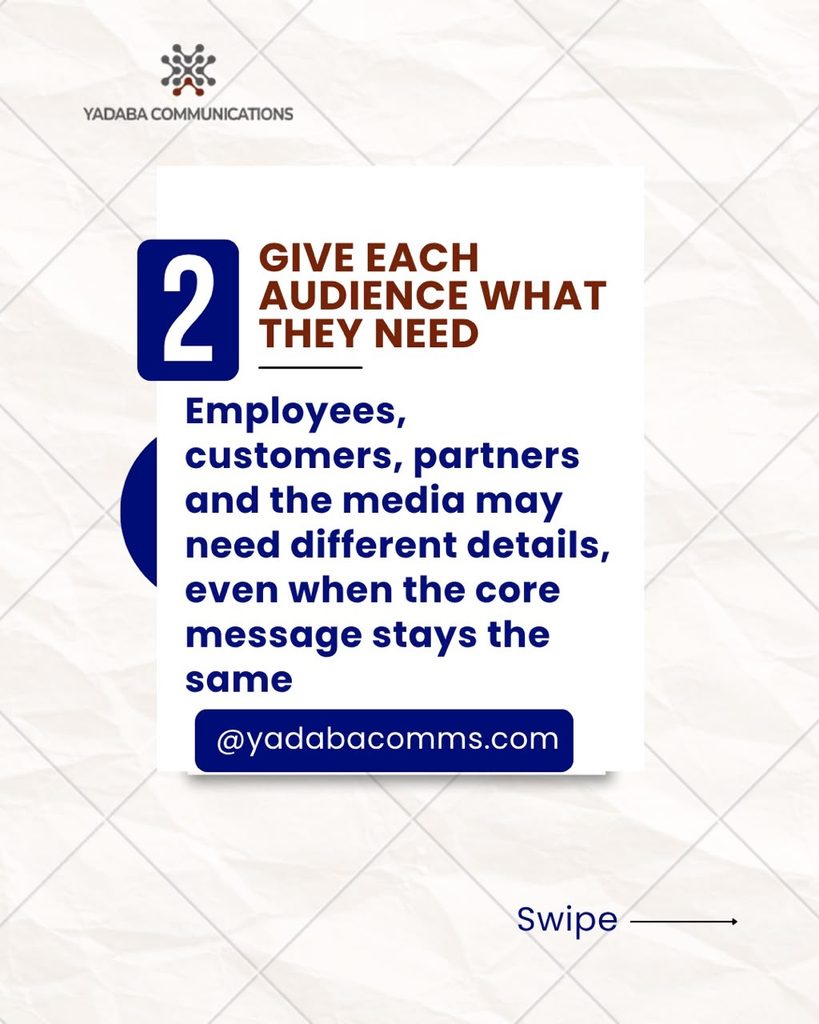
- Give each audience what they need.
Employees, customers, partners and the media may need different details, even when the core message stays the same.
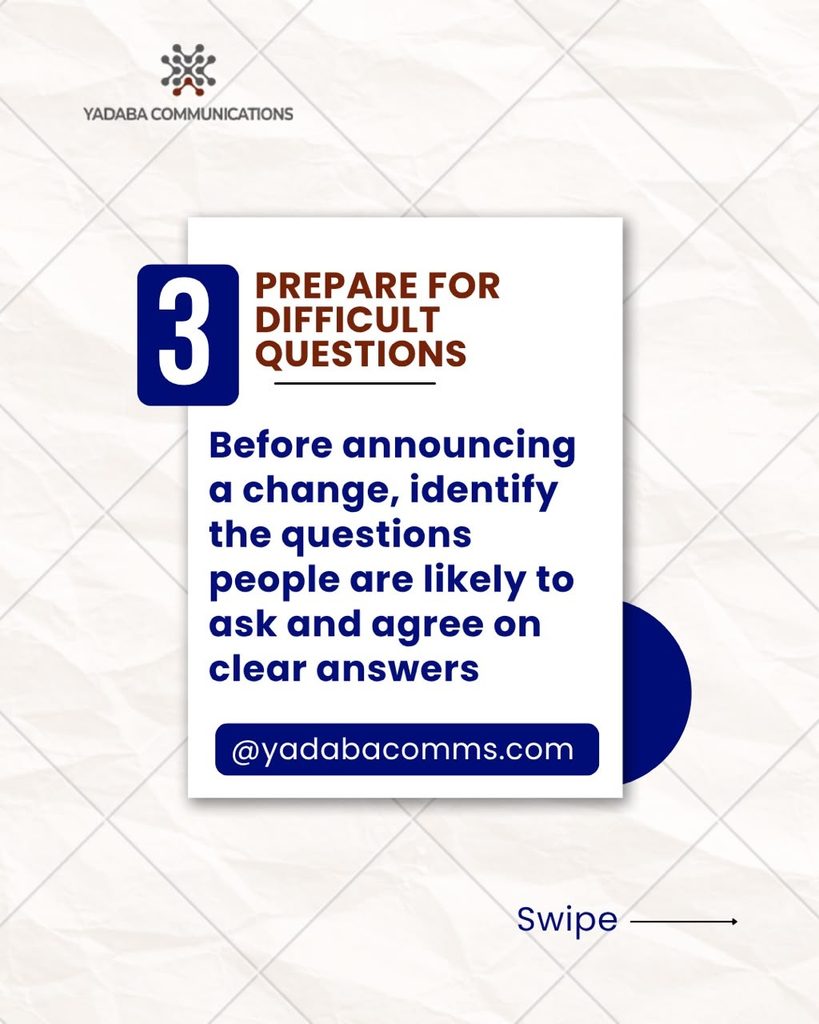
- Prepare for difficult questions.
Before announcing a change, identify the questions people are likely to ask and agree on clear answers.
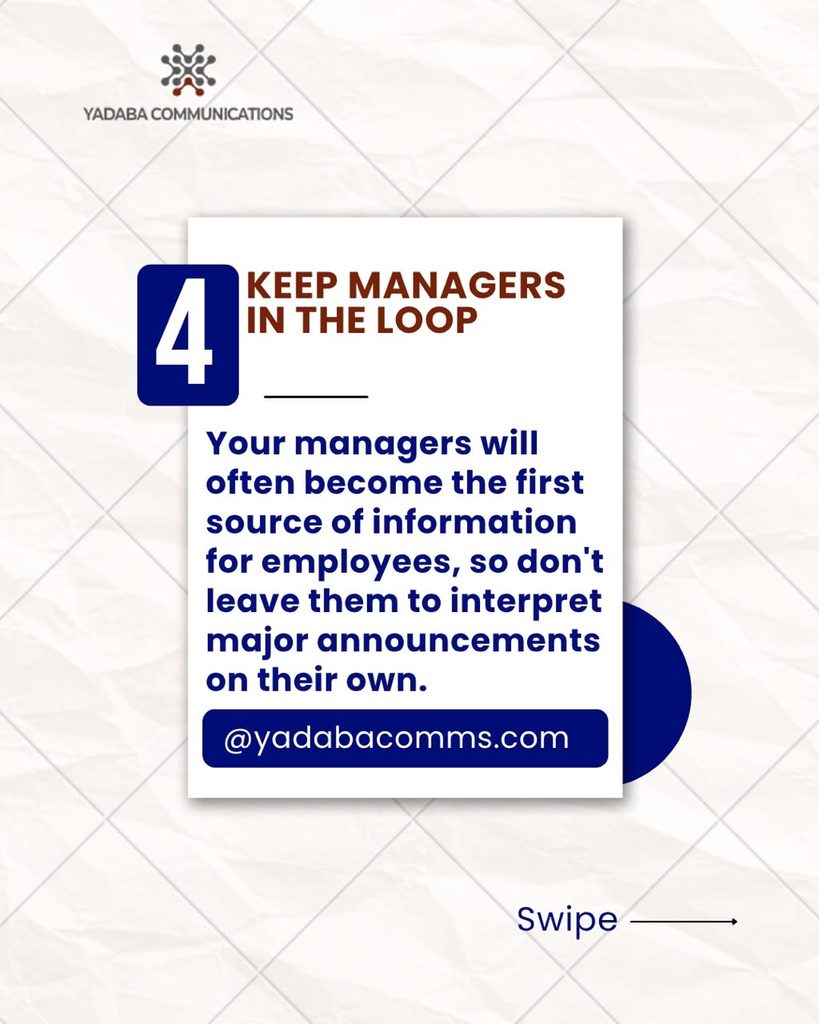
- Keep managers in the loop.
Your managers will often become the first source of information for employees, so don’t leave them to interpret major announcements on their own.
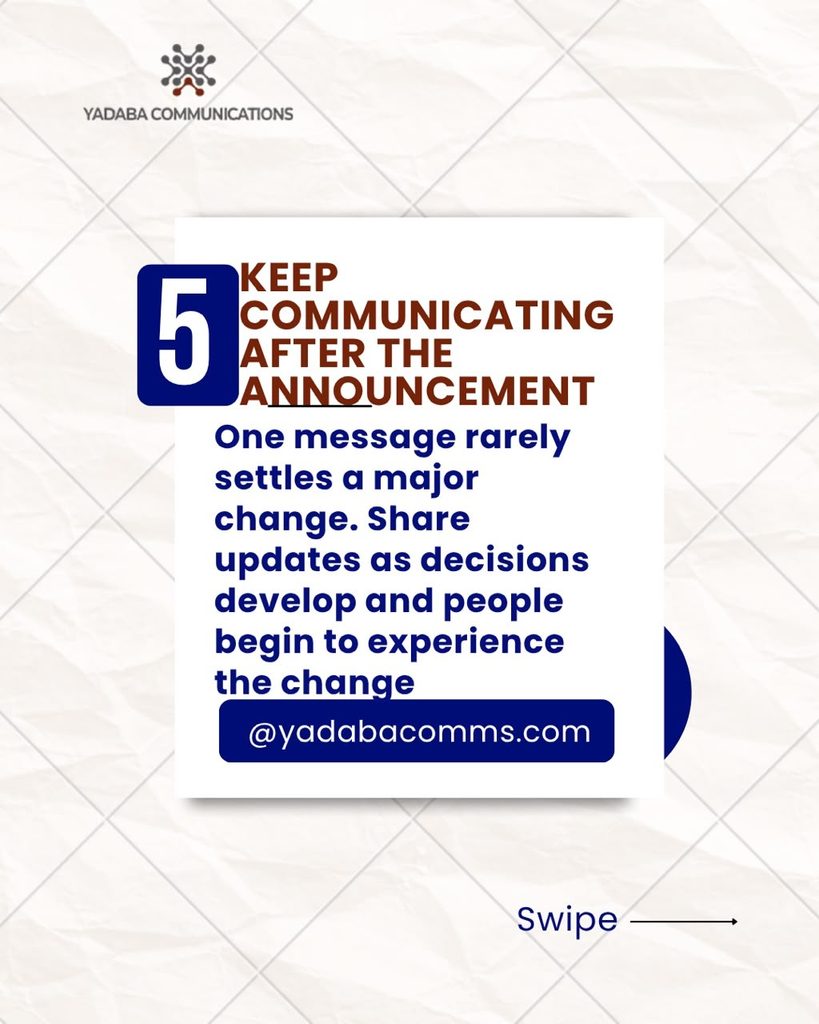
- Keep communicating after the announcement.
One message rarely settles a major change. Share updates as decisions develop and people begin to experience the change.
## Social Media Caption – Tips Card
Change doesn’t become easier just because the announcement has been made.
The real communication work often starts afterwards—when employees have questions, stakeholders want clarity and different audiences begin interpreting the decision in their own way.
We’ve put together 5 practical tips for communicating during organisational change.
Save the card, share it with your team, and keep it handy for your next major transition.
Need help planning communication around a change? Talk to Yadaba Communications.
info@yadabacomms.com | yadabacomms@gmail.com
0530505004 | 0505902672
#YadabaComms #PublicRelations
Tips